에 대해 Jumeokbap
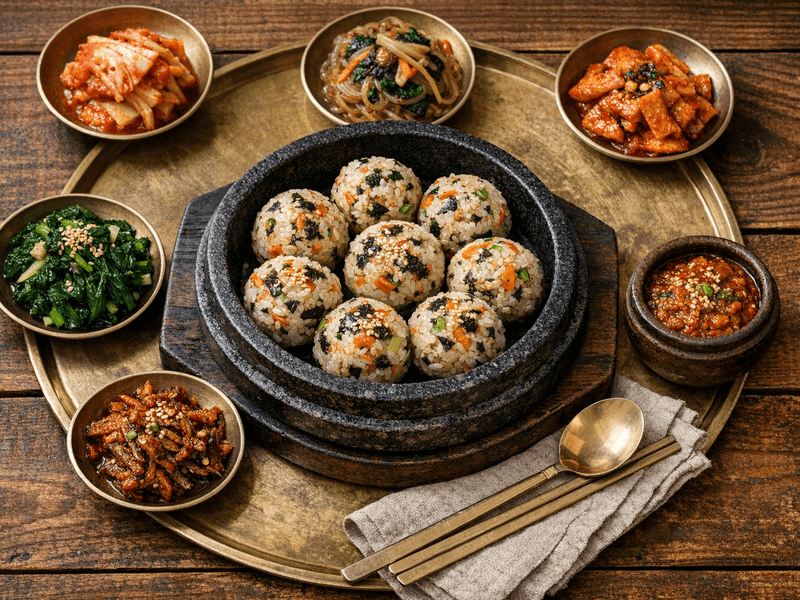
Korean rice balls with sesame and seaweed
How to Make Jumeokbap (Traditional & Healthy Version)
Jumeokbap, literally translating to 'fist rice' in Korean, is a beloved traditional Korean rice ball dish. Originating as a convenient meal for workers and students, these rice balls are now a staple in Korean homes and lunch boxes, known as dosirak. Jumeokbap is cherished for its portability, simplicity, and versatility, making it perfect for busy days or picnics. The dish is typically made with steamed short-grain rice seasoned with sesame oil and salt, then mixed with a variety of flavorful ingredients like vegetables, seaweed, and protein such as bulgogi beef or canned tuna. Jumeokbap is especially popular among families, as it’s easy for children to handle and fun to make together. Served alongside banchan (Korean side dishes) such as kimchi or pickled radish, and often paired with fermented foods, Jumeokbap embodies Korea’s communal eating culture. The taste is savory and aromatic, with the nutty richness of sesame oil balancing the umami from proteins and seaweed. This healthy Korean recipe is a great choice for anyone seeking a nutritious, satisfying, and authentic Korean rice dish.
재료(2-3 rice balls (approx. 200g cooked rice per person) 기준)
- 1 cup (uncooked) Short-grain white rice (bap (밥))
- 80g Cooked bulgogi beef (or cooked ground beef)
- 1/4 cup Carrot (finely diced)
- 1/4 cup Cucumber (finely diced)
- 2 sheets Roasted seaweed (gim (김), crushed)
- 1 tablespoon Sesame oil (chamgireum (참기름))
- 1 teaspoon Soy sauce (ganjang (간장))
- 1/4 teaspoon Salt (to taste)
- 1 teaspoon Toasted sesame seeds (chamkkae (참깨))
- 1 tablespoon Green onion (finely chopped) - 선택 사항
조리 방법
- 1
Rinse the short-grain rice thoroughly under cold water until the water runs clear. Cook the rice in a rice cooker or on the stovetop with 1 cup of water.
15 minutes
Use slightly less water for firmer rice that's easier to shape.
- 2
While the rice cooks, sauté the diced carrot and cucumber in a nonstick pan over medium heat for 2-3 minutes until just softened. Set aside to cool.
5 minutes
Do not overcook vegetables; keep them slightly crunchy for better texture.
- 3
Once the rice is cooked, spread it in a wide bowl to cool slightly. Add sesame oil, soy sauce, and salt. Mix gently with a rice paddle.
3 minutes
Mix rice while it's still warm for better seasoning absorption.
- 4
Add cooked bulgogi beef, sautéed vegetables, crushed seaweed, and toasted sesame seeds to the rice. Mix thoroughly but gently to avoid mashing the grains.
3 minutes
Use a gloved or wet hand to mix if rice is too hot.
이 음식이 건강한 이유
This healthy Jumeokbap recipe uses minimal oil, lean protein, and plenty of vegetables, making it lower in calories and saturated fat than many other rice dishes. The inclusion of fermented foods as banchan enhances digestion and nutrient absorption. Using whole, minimally processed ingredients ensures a nutrient-dense meal suitable for weight management and balanced nutrition.
Jumeokbap is a balanced dish rich in complex carbohydrates from rice, lean protein from beef, and essential vitamins and minerals from mixed vegetables. Sesame oil and seeds add healthy fats, while seaweed contributes iodine, calcium, and other micronutrients. Including banchan such as kimchi adds probiotics and fiber, promoting gut health. This combination delivers a meal that supports sustained energy, muscle repair, and overall well-being.
팁
- 💡Tip 1: Shape rice balls while rice is still warm for easier handling.
- 💡Tip 2: Add a bit of gochujang (Korean chili paste) for a spicy kick.
- 💡Tip 3: Pair Jumeokbap with fermented banchan like kimchi for enhanced flavor and nutrition.
보관 및 제공
Store leftover Jumeokbap in an airtight container in the refrigerator for up to 1 day. For best texture, let come to room temperature before eating. Not recommended to freeze.
가장 잘 어울리는 때: Breakfast or Lunch
영양 성분
| 영양소 | 100g당 |
|---|---|
| 에너지 | 145.0 kcal |
| 단백질 | 3.0 g |
| 탄수화물 | 25.0 g |
| 총 지방 | 3.0 g |
| 식이섬유 | 1.0 g |