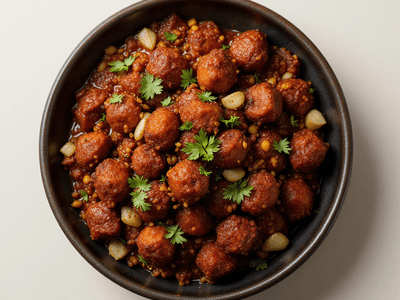
에 대해 Kodari Jorim
Braised semi-dried pollock in spicy sauce
How to Make Kodari Jorim (Traditional & Healthy Version)
Kodari Jorim is a classic Korean dish that features semi-dried pollack (kodari) simmered in a savory and mildly spicy sauce. This traditional jorim, or braised stew, is cherished for its rich flavors and firm fish texture. Kodari, a local delicacy, is pollack that has been partially dried, which intensifies its umami and makes it ideal for absorbing the bold seasonings used in Korean cuisine. The dish is often served as a main course alongside steamed rice and an array of banchan, or side dishes, including kimchi and other fermented vegetables, highlighting Korea’s deep-rooted culture of communal eating and fermentation. Kodari Jorim is especially popular in the colder months, when hearty stews provide warmth and nourishment. Its balanced flavor profile—combining soy sauce (ganjang), gochugaru (Korean chili flakes), garlic, and ginger—offers a harmonious blend of spicy, salty, and subtly sweet notes. Traditionally, it is enjoyed in family gatherings and is a staple in many Korean homes, reflecting the country’s reverence for seafood and the art of slow cooking. This healthy adaptation preserves the authentic taste while reducing excess calories and sodium, making it a perfect choice for calorie-conscious diners.
재료(1 medium-sized portion suitable for a Korean meal with rice and banchan 기준)
- 350g Semi-dried pollack (kodari) (코다리, cleaned and cut into chunks)
- 2 tbsp Soy sauce (ganjang) (authentic Korean soy sauce)
- 1 tbsp Gochugaru (Korean chili flakes) (고추가루, adjust to taste)
- 3 cloves Garlic (minced)
- 1 tsp Ginger (grated)
- 100g Daikon radish (무, sliced)
- 1/2 medium Onion (sliced)
- 1 stalk Green onion (chopped)
- 1 tbsp Rice syrup (ssal cheong) (쌀청, for sweetness, can substitute with honey) - 선택 사항
- 1 cup Water (for braising)
- 1/4 tsp Black pepper (freshly ground)
조리 방법
- 1
Rinse the semi-dried pollack (kodari) under cold water to remove excess salt and impurities. Pat dry and cut into bite-sized chunks.
5 minutes
Ensure kodari pieces are uniform for even cooking.
- 2
Prepare the vegetables by slicing daikon radish, onion, and chopping green onion. Mince the garlic and grate the ginger.
5 minutes
Use fresh ginger for a brighter flavor.
- 3
In a mixing bowl, combine soy sauce, gochugaru, garlic, ginger, rice syrup (if using), and black pepper. Stir well to make the braising sauce.
3 minutes
Adjust gochugaru for desired heat level.
- 4
Layer the daikon radish and onion at the bottom of a shallow pot. Place kodari pieces on top.
2 minutes
Radish acts as a flavor base and prevents sticking.
이 음식이 건강한 이유
This version of Kodari Jorim uses minimal oil and natural sweeteners, making it lower in calories and sodium than typical stews. The inclusion of vegetables and fermented banchan enhances gut health, while lean pollack keeps the dish light yet satisfying. It fits well into a balanced, health-conscious Korean diet and provides deep, authentic flavors without compromising nutrition.
Kodari Jorim is rich in lean protein from pollack, which supports muscle health and provides essential amino acids. Daikon radish and onions offer dietary fiber, vitamin C, and antioxidants. Gochugaru and ginger add metabolism-boosting properties and anti-inflammatory benefits. The dish is low in saturated fat and contains healthy minerals like calcium, potassium, and magnesium, supporting overall wellness.
팁
- 💡Tip 1: Use authentic kodari for the best texture and flavor.
- 💡Tip 2: Simmer slowly to allow the sauce to penetrate the fish and vegetables.
- 💡Tip 3: Pair Kodari Jorim with kimchi and other fermented banchan to enhance gut health.
보관 및 제공
Store leftovers in an airtight container in the refrigerator for up to 2 days. Reheat gently on the stove, adding a splash of water if needed to prevent drying.
가장 잘 어울리는 때: Breakfast or Lunch
영양 성분
| 영양소 | 100g당 |
|---|---|
| 에너지 | 110.0 kcal |
| 단백질 | 14.0 g |
| 탄수화물 | 6.0 g |
| 총 지방 | 3.0 g |
| 식이섬유 | 1.0 g |