에 대해 Bibimbap
Mixed rice with vegetables, gochujang, and optional egg
How to Make Bibimbap (Traditional & Healthy Version)
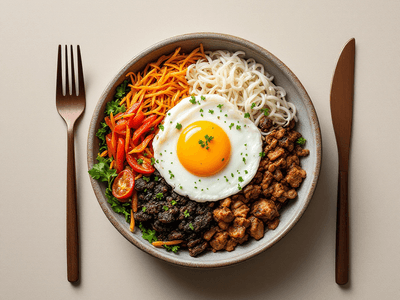
Bibimbap (비빔밥) is one of Korea's most beloved and visually stunning rice dishes, celebrated for its vibrant colors, balanced flavors, and nourishing ingredients. Originating from Korea, Bibimbap literally means 'mixed rice', and it brings together a variety of seasoned vegetables (namul), a perfectly cooked egg, and spicy gochujang (Korean red chili paste) over a bowl of warm rice. The beauty of Bibimbap lies in its harmony—each ingredient is prepared separately to highlight its unique flavors and textures before being mixed together before eating. Bibimbap is a staple both in Korean homes and restaurants, often served with an array of banchan (side dishes), such as kimchi, pickled radish, and other fermented foods. Its roots are deeply embedded in Korea's agricultural culture, reflecting the importance of rice and seasonal vegetables. Bibimbap is enjoyed year-round, but especially during celebrations or when a nourishing, balanced meal is desired. The combination of fresh vegetables, fermented foods, and rice creates a satisfying and healthy meal that embodies the essence of Korean cuisine. Not only is Bibimbap delicious and hearty, but it is also highly customizable. This vegetarian, health-conscious version highlights the dish’s lightness and nutritional variety, making it an excellent choice for those seeking a wholesome and authentic Korean meal.
재료(1 medium bowl per person 기준)
- 2 cups Cooked short-grain rice (bap (밥))
- 1/2 cup Carrot (julienned)
- 1/2 cup Zucchini (julienned)
- 1 cup Spinach (blanched)
- 1 cup Bean sprouts (blanched)
- 1/2 cup Shiitake mushrooms (sliced)
- 2 Eggs (fried sunny-side up)
- 2 tbsp Gochujang (Korean chili paste) (for sauce)
- 2 tsp Sesame oil
- 1 tsp Sesame seeds (toasted)
- 1 clove Garlic (minced) - 선택 사항
- 1 tbsp Soy sauce (for seasoning vegetables)
- 1/2 cup Kimchi (as banchan, optional but recommended) - 선택 사항
조리 방법
- 1
Prepare the vegetables: Julienne the carrots and zucchini. Blanch spinach and bean sprouts separately in boiling water for 1-2 minutes, then rinse in cold water and squeeze out excess moisture.
5 minutes
Season each vegetable lightly with salt or a dash of soy sauce for enhanced flavor.
- 2
Sauté the carrots, zucchini, and mushrooms separately in a nonstick pan with a few drops of sesame oil until just tender. Set each aside.
5 minutes
Do not overcook; keep vegetables slightly crisp for better texture.
- 3
Season blanched spinach and bean sprouts with a touch of sesame oil, minced garlic, and a pinch of salt. Mix well and set aside.
3 minutes
Use hands or chopsticks to mix for even seasoning.
- 4
Fry the eggs sunny-side up in a lightly oiled pan until the whites are set but yolk remains runny.
3 minutes
A runny yolk adds richness and silkiness to the mixed rice.
이 음식이 건강한 이유
Bibimbap is a healthy choice due to its reliance on fresh, minimally processed ingredients and its balanced macronutrient profile. The variety of seasonal vegetables delivers antioxidants and essential nutrients, while gochujang and kimchi boost metabolism and digestive health. This dish is low in saturated fat and easy to adapt for different dietary needs, making it ideal for those seeking nutritious Korean meals.
This vegetarian Bibimbap is packed with fiber, vitamins A, C, and K from assorted vegetables like spinach, carrots, and zucchini. The combination of rice and egg provides a good balance of complex carbohydrates and protein, while fermented kimchi adds probiotics for gut health. Sesame oil and seeds contribute healthy unsaturated fats and minerals such as calcium and magnesium.
팁
- 💡Tip 1: Prepare all vegetables in advance for quick assembly.
- 💡Tip 2: Use a stone bowl (dolsot) for crispy rice on the bottom if available.
- 💡Tip 3: Add more fermented banchan like kimchi for extra probiotics and flavor.
보관 및 제공
Store leftover vegetables and rice separately in airtight containers in the refrigerator for up to 2 days. Reheat rice and assemble freshly for best texture. Avoid storing fried eggs; cook fresh when serving.
가장 잘 어울리는 때: Breakfast or Lunch
영양 성분
| 영양소 | 100g당 |
|---|---|
| 에너지 | 148.0 kcal |
| 단백질 | 6.0 g |
| 탄수화물 | 22.0 g |
| 총 지방 | 4.0 g |
| 식이섬유 | 2.0 g |
| 당류 | 2.1 g |
| 나트륨 | 320.0 mg |
| 칼륨 | 180.0 mg |
| 콜레스테롤 | 18.0 mg |
| 비타민A | 350.0 IU |
| 비타민C | 7.0 mg |
| 칼슘 | 38.0 mg |
| 철분 | 1.2 mg |
| Magnesium | 22.0 mg |
| Zinc | 0.7 mg |
| Phosphorus | 90.0 mg |
| Vitamin D | 0.3 IU |
| Vitamin B1 (Thiamine) | 0.1 mg |
| Vitamin B2 (Riboflavin) | 0.1 mg |
| Vitamin B3 (Niacin) | 1.1 mg |
| Vitamin B6 | 0.1 mg |
| Vitamin B12 | 0.2 µg |
| Folate | 28.0 µg |